


Efforts by Kosovo’s ruling Self-determination (Vetëvendosje) party to marginalize the Serbian List may be interpreted as political signals aimed primarily at domestic audiences, analysts say, but legal experts note there is no clear legal basis to exclude the largest Serb party from the political process.
Emir Abrashi, a representative of the NGO Democracy Plus, told Radio Free Europe that there is no political or discretionary rationale to sideline the Serbian List, noting that the party maintains strong support in Belgrade.
Last Saturday, members of Vetëvendosje voted against confirming the final results of the Serbian List’s election victories, prompting a statement from the Organization for Security and Co-operation in Europe (OSCE) calling for respect for international electoral standards and the transparent publication of results.
A U.S. Embassy spokesperson in Kosovo said the Central Election Commission’s (CEC) decision to withhold confirmation of the Serbian List’s results violates citizens’ democratic right to choose their representatives. “Any attempt to undermine this basic principle undermines the partnership between the United States and Kosovo,” the statement said.
Vetëvendosje, led by Prime Minister Albin Kurti, has previously sought to block the Serbian List from participating in elections, though such efforts were regularly overturned by Kosovo’s Electoral Complaints and Appeals Panel. This time, the Serbian List filed a complaint against the CEC decision, describing it as “shameful, discriminatory, and illegal.”
Political analyst Ognjen Gogić said Vetëvendosje’s actions send a message to Kosovo Serbs that their votes do not matter, creating tensions in the country’s fragile inter-ethnic relations.
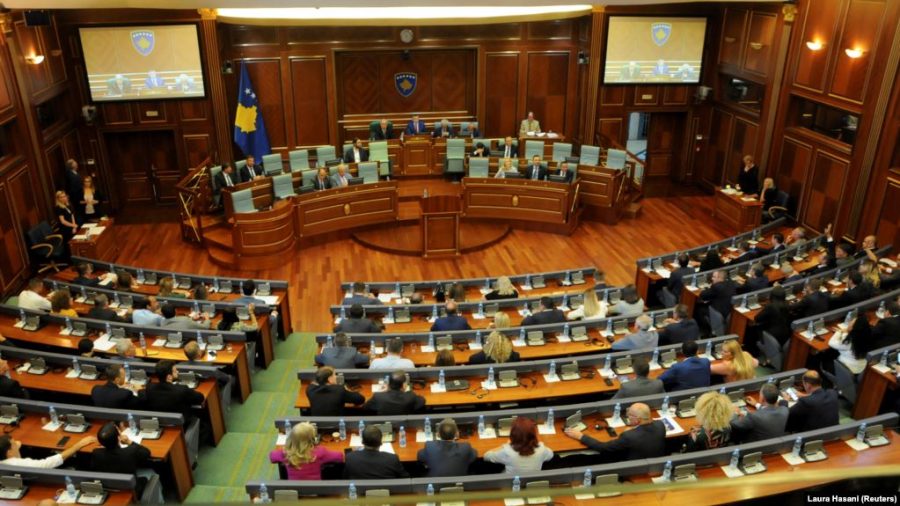
In Kosovo’s 120-seat parliament, ten seats are reserved for the Serb community. The Serbian List won nine of these with over 42,000 votes, while one seat went to Nenad Rašić of the Freedom, Justice, and Survival party. Vetëvendosje insists it will cooperate only with Rašić, labeling the Serbian List as a “proxy for Belgrade” and citing its failure to distance itself from former deputy Milan Radoičić, who claimed responsibility for the armed attack in Banjë in September 2023.
The Constitutional Court recently ruled that only the largest parliamentary party representing the Serb community – in this case the Serbian List – can nominate the Serb deputy speaker of parliament. Analysts say Vetëvendosje’s refusal to work with the Serbian List risks delaying parliamentary formation and creating broader institutional blockages.
“Kosovo could miss deadlines for constituting parliament if Vetëvendosje continues to oppose the Serbian List. Time is being wasted without achieving anything, because the elimination of the Serbian List is not legally possible,” Gogić said.
Abrashi added that political parties can only be excluded from the electoral process if they fail to meet clearly defined legal criteria or are declared illegal by competent judicial or security authorities. “The role of the CEC is administrative and procedural, not political, and any action beyond its mandate is subject to review,” he said, emphasizing that adherence to legal procedures and equal treatment of all election participants is essential to maintaining trust in institutions.
The widening gap between Vetëvendosje and the Serbian List underscores the importance of compromise for forming new institutions. Analysts note that parliamentary rules require the participation of community representatives to ensure a functioning legislative process.
Kurti, serving in a caretaker mandate, said last year that disagreements with the United States largely relate to Serbia and its structures, with Washington viewing his stance toward Belgrade as overly rigid. In September 2025, the U.S. temporarily suspended strategic dialogue with Kosovo over concerns about government actions during the caretaker period.
Western embassies and the European Union have previously condemned efforts to block the Serbian List, emphasizing that minority communities must be guaranteed equal participation in the political process.