


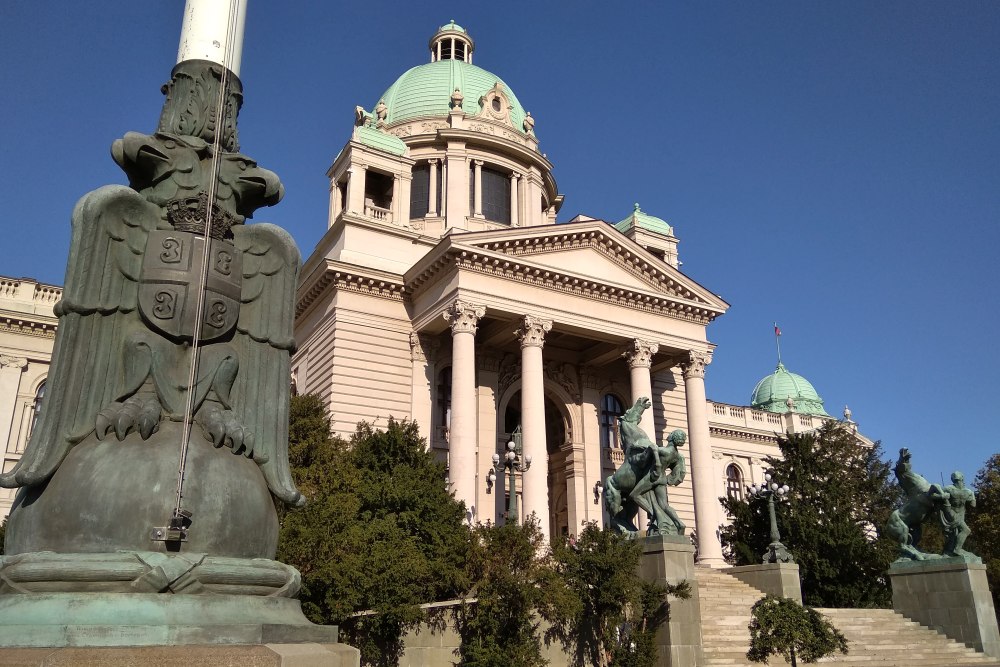
The European Commission said on Wednesday it will assess recent amendments to Serbia’s judicial laws, passed by the National Assembly on January 28, which it warned could represent a “significant step backward” in the country’s commitment to joining the European Union.
“The amendments were prepared and adopted through an accelerated and non-transparent process, without public consultations with all relevant stakeholders, including the European Commission and the Venice Commission,” Commission spokesperson Guillaume Marseilles said.
Marseilles added that the Commission will review the legal texts and “take appropriate action” once the assessment is complete. He stressed that, as an EU candidate country, Serbia is expected to strengthen judicial independence and the autonomy of public prosecutors, in line with Commission recommendations.
Unconfirmed sources told Radio Free Europe that the move could “seriously damage relations with Serbia.” Commission officials confirmed that concerns over the amendments were already raised by EU Commissioner for Justice Marta Kos during her meeting with Serbian President Aleksandar Vučić in Davos last week.
According to sources, EU legal experts are closely evaluating the newly adopted laws, and Brussels may request Serbian authorities to reconsider the legislation.
The ruling majority in the National Assembly approved a package of judicial laws proposed by Serbian Progressive Party (SNS) MP Uglješa Mrdić, rejecting all opposition amendments. The proposals included changes to the Law on Public Prosecutors, the Law on Judges, the Law on Court and Prosecutor Jurisdictions, the High Council of Prosecutors Act, and legislation on combating high-tech crime.
Government lawmakers defended the amendments, arguing they would improve efficiency and fairness in judicial operations. Mrdić said the reforms “marked the return of stolen justice to the state and the people.”
Opposition parties and legal experts criticized the legislation, warning that it would give the government greater control over the judiciary and undermine objectivity in public prosecution. The Organized Crime Prosecutor’s Office said the reforms could lead to a “forced and immediate reduction in the number of public prosecutors.”
The Serbian Prosecutors Association described the fast-tracked adoption without public consultation as “a serious deviation from domestic legislative tradition, which has been respected for over 20 years in the judicial sphere.”
The amendments come after months of criticism by government officials of the Organized Crime Prosecutor’s Office, which has investigated alleged corruption involving high-level officials. In August 2025, the office launched an inquiry into possible corruption during the Belgrade–Budapest railway reconstruction, implicating former ministers Goran Vesić and Tomislav Momirović, as well as officials of public enterprises.
Separately, the current Culture Minister, Nikola Selaković, faces an investigation into the removal of cultural heritage status from the General Staff complex in Belgrade. President Vučić has repeatedly labeled prosecutors as a “corrupt gang.”