



EU lawmakers urge probe into alleged violence against protesters as Serbia’s accession path comes under renewed scrutiny
A delegation of European Parliament lawmakers called on Friday for an independent investigation into allegations of violence against protesters in Serbia, warning that reported pressure on demonstrators, academics and media risk undermining democratic standards as the country seeks to advance its bid to join the European Union.
Marta Temido, a Portuguese lawmaker from the Socialists and Democrats group who led the mission, said the delegation had received “worrying reports” of inappropriate use of force against protesters and demonstrators, as well as accounts of financial, administrative and physical pressure on members of the academic community.
“We call for an urgent, impartial and transparent investigation into all allegations of the improper use of force against demonstrators,” Temido told a news conference in Belgrade at the end of a two-day fact-finding visit.
The mission, organised by the European Parliament’s foreign affairs committee, came against the backdrop of ongoing protests in Serbia and mounting criticism from Brussels over democratic backsliding, media freedom and the rule of law under President Aleksandar Vucic’s government.
Temido said freedom of expression was a fundamental right that must be respected and that the safety of protesters and journalists had to be guaranteed. She added that the delegation was also closely following proposed judicial reforms currently under debate in parliament, warning that some changes carried a risk of undermining judicial independence.
EU support, but conditions remain
Despite the criticism, Temido stressed that the European Parliament continued to support Serbia’s “European perspective”, describing the country as a priority for the EU.
“Our visit shows that Serbia matters to us. We are here because we care about Serbia and its citizens,” she said. “The European Parliament firmly believes the EU will not be complete without the Western Balkans, and Serbia is among those countries.”
However, she underlined that progress towards EU membership depended on full respect for EU values, including democracy and the rule of law, and not only on the adoption of reforms but also on their implementation.
The delegation held separate meetings with representatives of the ruling coalition and opposition parties, the deputy speaker of parliament Elvira Kovac, Minister for European Integration Nemanja Starovic, Foreign Minister Marko Djuric, as well as journalists, civil society organisations, students and members of the academic community.
Temido described discussions on democracy and the rule of law as “open and intensive”, saying talks also covered elections, implementation of recommendations from the OSCE’s Office for Democratic Institutions and Human Rights (ODIHR), media freedom and the appointment of members to Serbia’s electronic media regulator (REM).
Tensions with authorities
The visit was marked by tensions with senior Serbian officials. President Vucic and parliamentary speaker Ana Brnabic did not meet the delegation, with officials initially saying the lawmakers had “not been invited”. Temido said the mission had followed standard diplomatic protocol, had been announced in advance and had been welcomed by interlocutors.
She later softened her remarks, saying some officials were unavailable because they were abroad, noting that Vucic had attended the World Economic Forum in Davos and Brnabic had been on an official visit to Estonia. Brnabic, however, was back in Belgrade on Friday and told reporters the visit was “political” and aimed at supporting protesters.
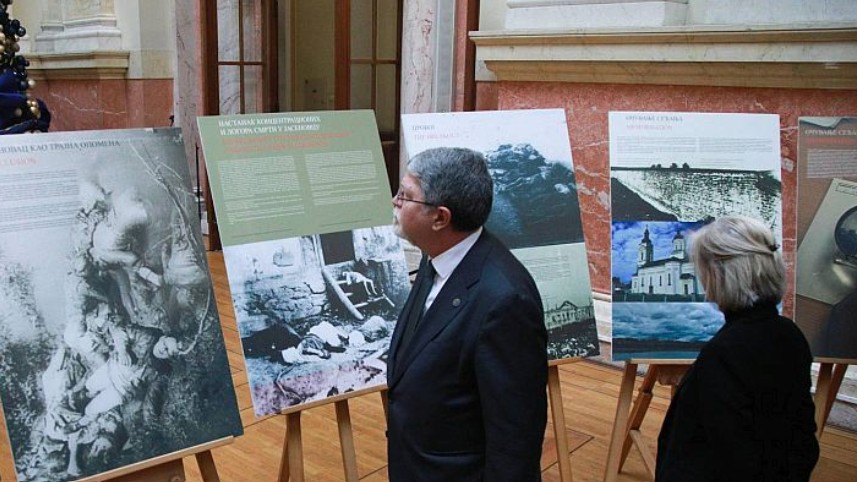
Serbian media and ruling party figures also accused the delegation of attempting to avoid an exhibition on victims of the World War Two-era Jasenovac concentration camp displayed in parliament, an allegation Temido denied.
“We did visit the exhibition,” she said. “It shows dark moments from history. My own country, Portugal, has had such moments too. What matters now is that we look to the future.”
Opposition and civil society raise concerns
Opposition politicians told the EU lawmakers that the situation in Serbia had deteriorated since the European Parliament adopted resolutions last year criticising democratic standards in the country. They warned that proposed judicial laws could further weaken the rule of law and called for targeted sanctions against senior officials deemed responsible for abuses.
Representatives of journalists’ associations and media watchdogs said they briefed the delegation on what they described as worsening conditions for independent media, including political pressure and intimidation. Academic leaders, including Belgrade University rector Vladan Djokic, raised concerns about police actions on university campuses and broader pressure on higher education institutions.
The mission followed a European Parliament resolution adopted in October 2025 that backed sending a fact-finding delegation to Serbia to assess democracy, protests and alleged repression of students and teachers. That resolution condemned what it described as state-sponsored violence, intimidation and arbitrary arrests, and said Serbia’s leadership bore political responsibility for an escalation of repression and the weakening of democratic institutions.
It also called on the European Commission to consider targeted individual sanctions against those responsible for serious violations of law and human rights, criticised the use of presidential pardons in cases involving violence against protesters, and urged Serbian authorities to ensure media freedom and curb inflammatory rhetoric by senior officials.
An earlier resolution in May said Serbia, despite some progress, still faced major obstacles on its EU path, including the need to strengthen internal political dialogue, fight corruption, normalise relations with Kosovo and align fully with EU foreign policy, including on the war in Ukraine.
Next steps
Temido said the delegation would report its findings to the European Parliament’s foreign affairs committee, though she cautioned that the impact of the report was difficult to predict.
“We understand that there can be miscommunication and harsh words,” she said. “But as we plan to move together on the European path, we will come again.”
The delegation included lawmakers from across the political spectrum, including the centre-right European People’s Party, Socialists and Democrats, Greens, Renew Europe, European Conservatives and Reformists and other groups.