


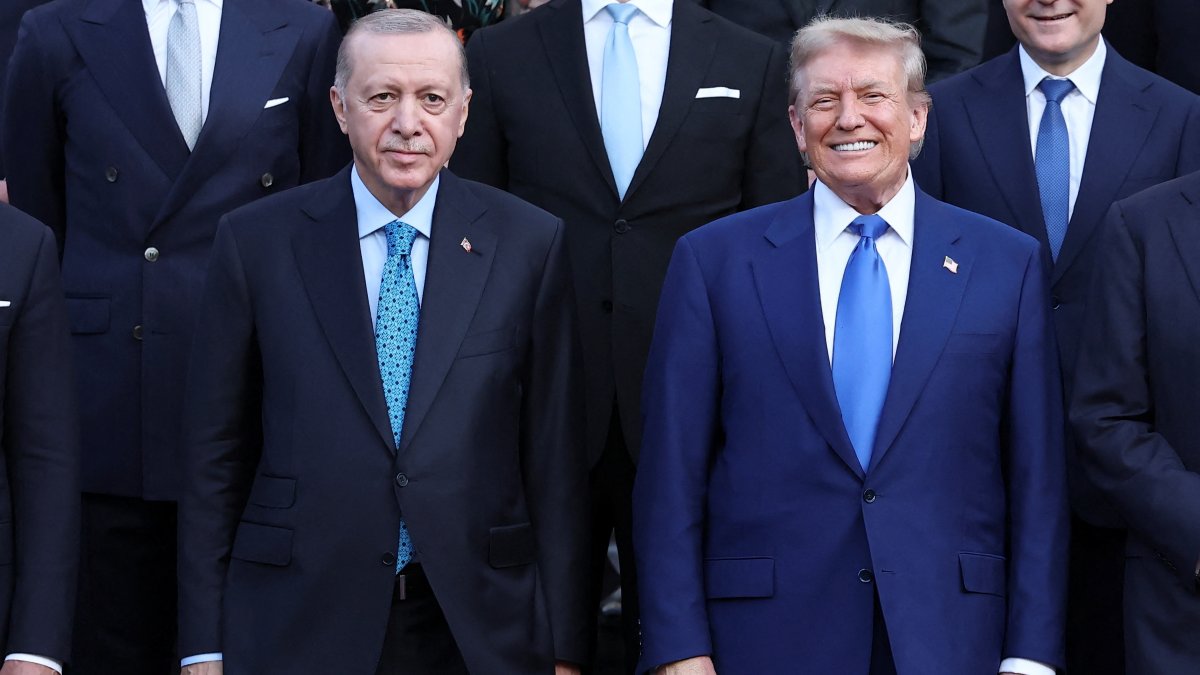
Turkey ended 2025 under the continued political dominance of President Recep Tayyip Erdogan and his Justice and Development Party (AKP), navigating a year of economic recalibration, protests over the detention of key opposition figures and tightening controls over political dissent.
Erdogan’s government maintained firm control of state institutions and the political agenda, even as the main opposition Republican People’s Party (CHP) struggled with fragmentation and legal pressures. Nationwide protests erupted in March after the arrest of Istanbul Mayor Ekrem İmamoğlu, a leading opposition figure and potential challenger to Erdogan’s grip on power. His detention on corruption and terrorism‑related charges triggered demonstrations in major cities and drew criticism from rights groups, though authorities responded with a crackdown that included detentions and restrictions on gatherings.
The government’s position was bolstered by defections of opposition mayors to the AKP, reflecting internal divisions within the CHP and highlighting the ruling party’s organisational strength. Analysts said the AKP’s consolidation of influence has weakened the opposition’s capacity to mobilise effectively ahead of future elections.
Economically, Turkey’s inflation, once among the world’s highest, continued to ease but remained elevated. Official figures showed annual inflation at about 31% in late 2025, its lowest in several years, and lawmakers passed legislation suspending inflation‑adjusted accounting requirements through 2027 to ease corporate reporting pressures. The government’s medium‑term programme projects inflation falling further toward the 20% range in early 2026 before a longer‑term path to single‑digit rates.
Turkish authorities also emphasised structural reforms to support disinflation and fiscal adjustment, aiming to attract investment and improve economic stability after years of unconventional monetary policy that had previously fuelled price volatility.
On energy policy, Ankara secured new financing from Russia for the Akkuyu nuclear plant, underscoring its strategic pursuit of diversified energy sources, and explored major solar projects with Gulf partners as part of longer‑term power sector expansion.
Security issues remained prominent, with police continuing counter‑terrorism operations, including the arrest of a suspected Islamic State operative allegedly planning attacks around holiday celebrations.
Turkey’s foreign policy in 2025 continued to balance relations with the West and traditional partners. Ankara maintained a cautious stance on EU and NATO engagement, while deepening ties with Russia in areas such as energy and infrastructure, reflecting a pragmatic approach to geopolitical challenges.
As 2026 begins, Turkey faces the task of sustaining economic stability, managing political dissent and preparing for a presidential and parliamentary cycle in 2028, with questions growing over democratic freedoms and the strength of institutional checks amid an increasingly centralised leadership.