


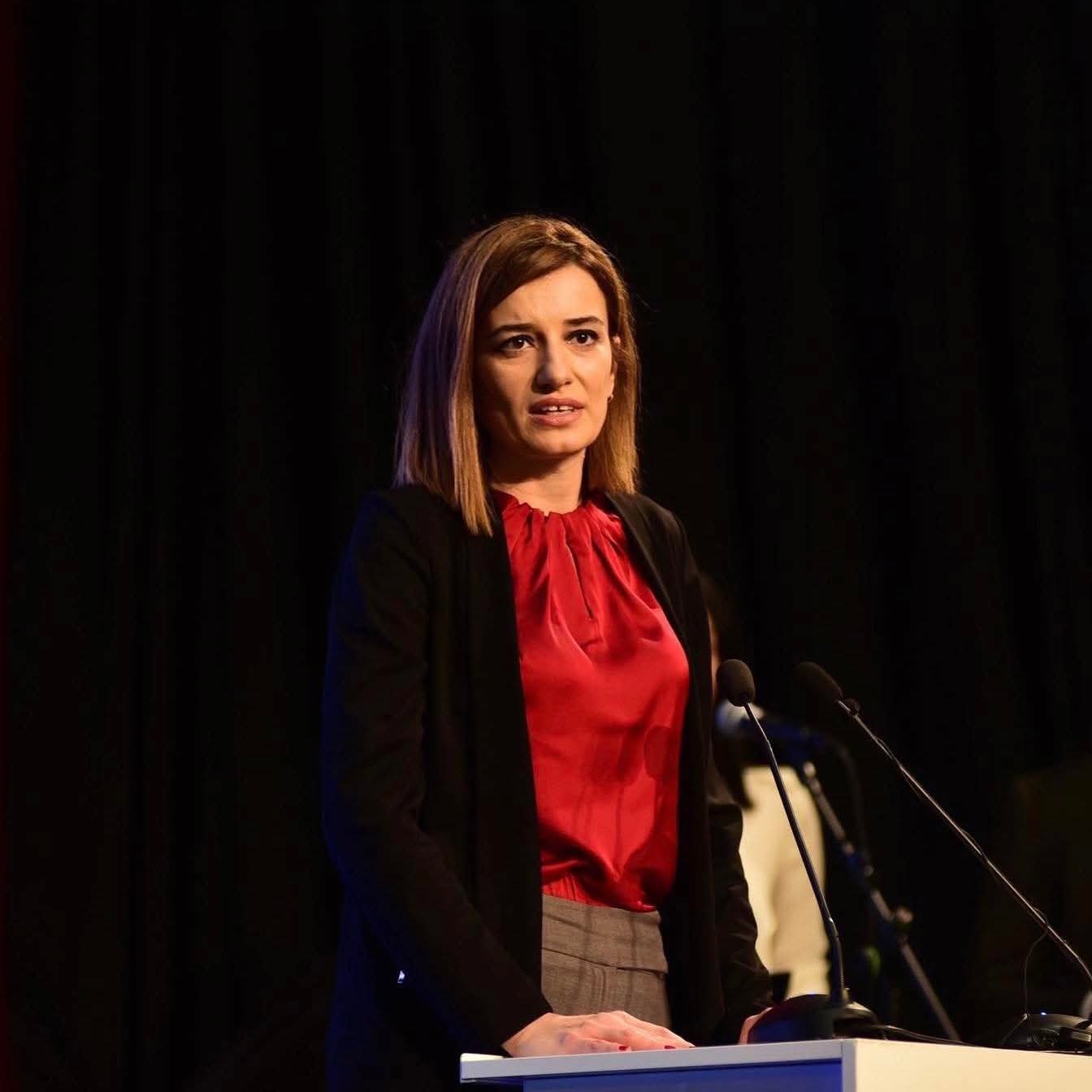
France’s decision to block Montenegro from closing two EU negotiation chapters is political, former Montenegrin European affairs minister and BiEPAG member Jovana Marović said, highlighting the influence of domestic public opinion in Paris.
Montenegro had been expected to close five chapters in its EU accession talks by year-end, but French representatives in EU working bodies on Friday blocked the closure of Chapter 11 on Agriculture and Rural Development and Chapter 13 on Fisheries.
Marović told Montenegrin news agency MINA that weeks of discussions had already revealed a lack of consensus among EU member states on closing all five chapters. She said Montenegrin public discourse had portrayed the process as irreversible and nearly complete, masking the political reality in Brussels.
“The gap between political reality in Brussels and messages from Montenegrin institutions exposed the absence of a serious lobbying strategy, crisis management, and readiness to anticipate risks,” Marović said.
She described France’s move as a clear political signal. “It shows there are no shortcuts, and negotiations will not be easily concluded. Any deficiency in meeting criteria can be used to reduce the story to merit, rather than a lack of political will for enlargement,” she said.
Marović noted that the EU had assessed that conditions for closing the chapters were met and emphasized that the French Ministry of Agriculture withheld approval. She added that Germany had recently urged preparations for Montenegro’s accession treaty, but this was not reflected in the draft conclusions of the EU Council.
“The French move raises questions about the broader EU enlargement process, showing that Paris continues to be guided primarily by domestic public opinion, which traditionally opposes expansion,” Marović said.
She also warned that optimism alone is insufficient. Montenegro must now mobilize all available capacities, define a realistic strategy, engage in effective lobbying, and maintain institutional responsibility to navigate potential blocks and political setbacks.
“Only through such an approach can Montenegro demonstrate itself as a credible partner, regardless of how ready the EU is to recognize that credibility at any given moment,” she said.